
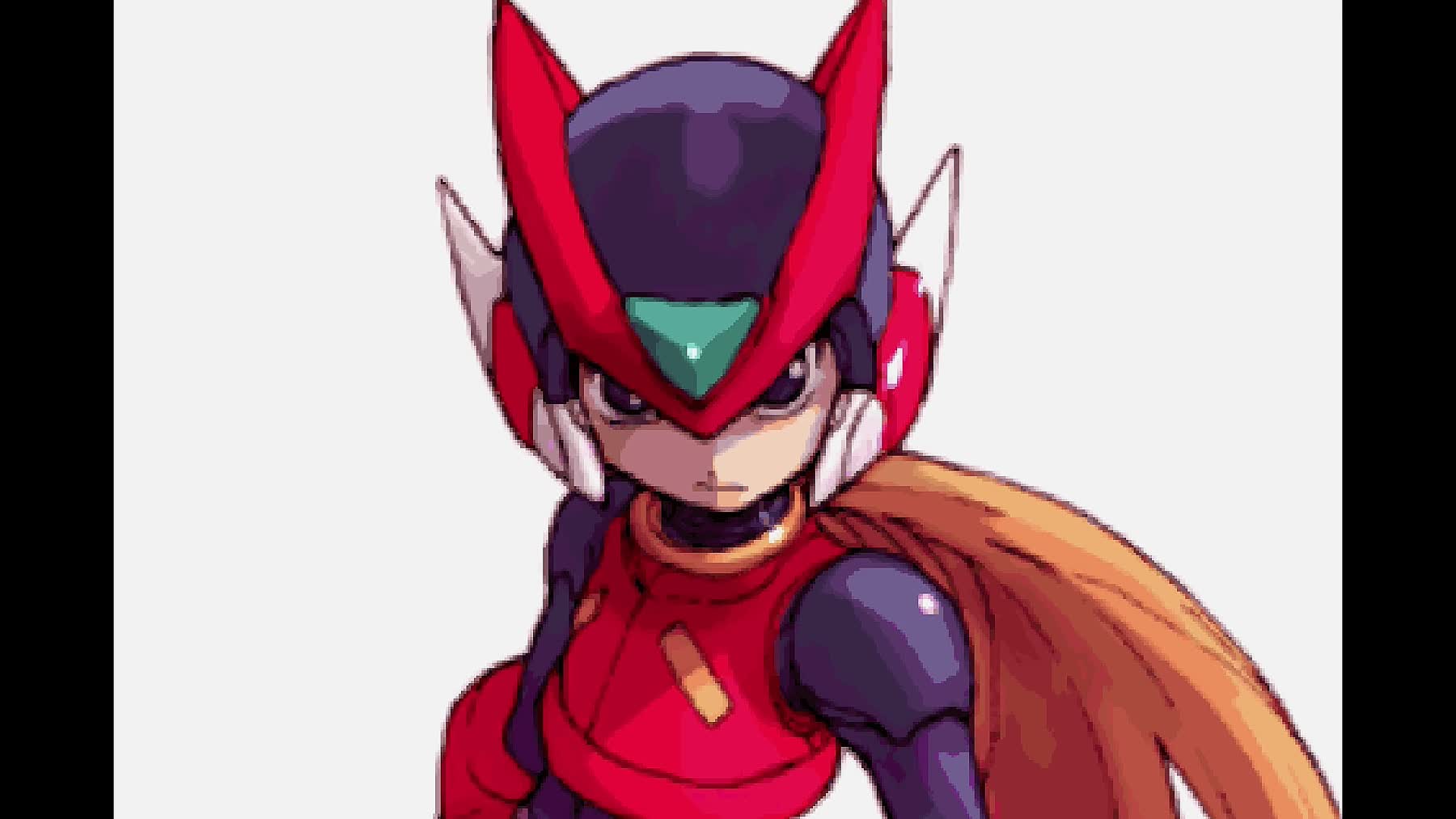
Twenty-four years ago today, Mega Man Zero woke up and made the future of Mega Man feel dangerous again.
Released in Japan for Game Boy Advance on April 26, 2002, Mega Man Zero did more than give one of Capcom's most popular characters his own starring role. It took the sleek hero of Mega Man X, pulled him out of the colorful boss-rush comfort zone that had made the series famous and dropped him into a world where victory felt fragile. The result was smaller than a console Mega Man game, at least on paper. In the hands, it felt sharper, meaner and more modern than almost anything the franchise had attempted.
That is the strange magic of Mega Man Zero. It is a handheld action game with tiny sprites, quick stages and a familiar side-scrolling language. Yet it also feels like a clean break. Zero is no longer the cool partner waiting in the wings. X is no longer the simple ideal of heroic peace. Reploids are hunted under the authority of Neo Arcadia, the Resistance is barely surviving and Ciel's first act is not a grand call to adventure. She is desperate. She needs a legend to wake up because the present has already failed.
For a franchise often built around bright robot masters and clean weapon loops, that was a real shift.
Mega Man had been changing fast by 2002. The classic series had already become retro in spirit. Mega Man X had carried the formula into the 16-bit era with wall jumps, dashes and a harder sci-fi tone. Mega Man Legends had gone 3D on PlayStation. Mega Man Battle Network, which launched with the Game Boy Advance in 2001, turned the brand into a network-age RPG built for a younger handheld audience.
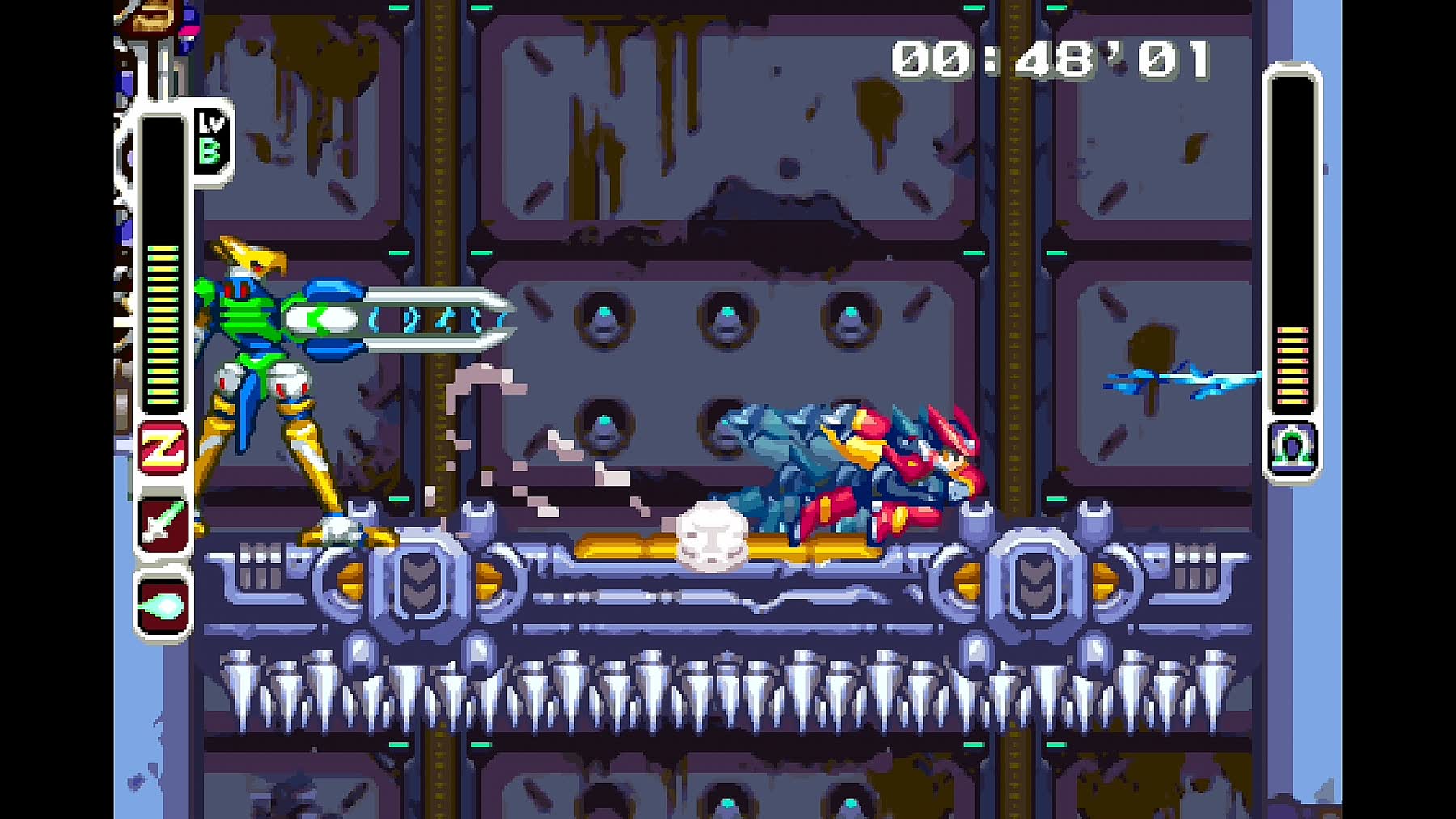
Mega Man Zero had to exist beside all of that without feeling redundant. Its answer was speed and severity. Instead of building another game around copying boss weapons, Inti Creates and Capcom centered Zero's identity on movement, proximity and punishment. You could fire a buster, but the Z Saber was the soul of the game. It encouraged players to close distance, read patterns and accept the risk of fighting almost face to face. That one emphasis changed the emotional temperature of Mega Man. The series had always demanded precision. Zero made that precision feel aggressive.
The design of Zero himself tells the same story. His body is lighter, his limbs are thinner and his silhouette is more fluid than the bulkier armor language of the X games. That was not just a visual flourish. It supported a game where dashing, slashing and quick recoveries mattered constantly. The character looked built for motion, then the levels asked players to prove they could keep up with him.
It could be brutal. Mega Man Zero is remembered partly because it does not meet the player halfway. Missions can be failed, rankings judge performance and Cyber-elves offer help at a cost. The game gives you systems that soften the blow, then reminds you that using them can hurt your score. That tension made it intimidating in 2002 and still gives it a particular reputation now. It is not difficult in the cozy, nostalgic sense where every hard thing has been sanded down by memory. It is difficult because it wants mastery and it does not hide that demand.
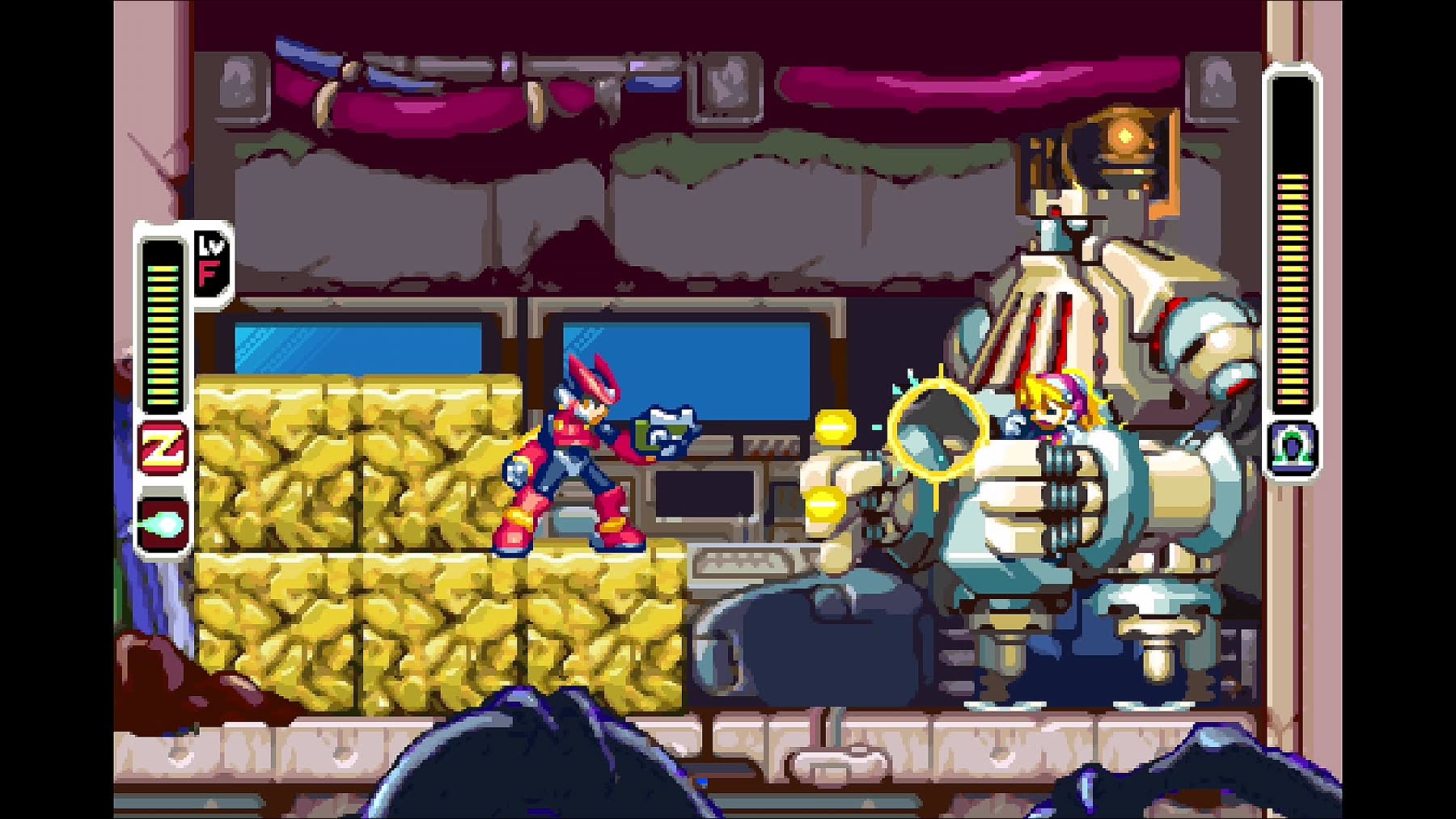
That harshness mattered because the story around it was harsh too. The first Mega Man Zero is not simply about stopping a villain. It is about waking up in the wreckage of someone else's peace. Neo Arcadia is presented as a utopia that has turned murderous, branding Reploids as Mavericks in the name of order and survival. Ciel is not a princess, operator or mascot. She is a scientist carrying guilt for a world she helped make. Zero is not a fresh-faced hero. He is an old weapon with damaged memory, asked to decide whether he still believes in protecting people.
For a Game Boy Advance action game, that setup had weight. It did not need long cinematic cutscenes to feel different. A few portraits, short dialogue scenes and the constant pressure of the mission structure were enough. The world felt worn down. The music sounded urgent. Even the color palette seemed less toy-like than many Mega Man players expected, trading bright Saturday-morning confidence for something dustier and more wounded.
The timing helped. The early 2000s were full of games trying to mature without always knowing what maturity meant. Some leaned into grit, others into angst or cinematic ambition. Mega Man Zero found a better route: it made its darker tone mechanical. The story says the world is desperate and the game makes every life, mistake and upgrade feel like part of that desperation. You do not just watch Zero survive in a crumbling future. You feel the game tightening around him.
That is why its difficulty remains more interesting than a simple badge of honor. The ranking system can be punishing, but it also captures something central to Zero's identity. He is legendary, so the game measures you against a legend. He is supposed to be precise, so sloppy victories feel compromised. He is supposed to fight up close, so bosses become duels rather than distant shooting galleries. The design can frustrate, especially when the first game is less forgiving than its sequels, but it also gives the series its bite.
Critical response at the time reflected that split. Mega Man Zero was broadly well received, with praise for its graphics, story, speed and action. Its challenge was the recurring caveat. GameSpot's review called it impressive but not for everyone, while Metacritic's aggregated score settled at 82 for the Game Boy Advance release. That feels about right for a game that was admired even when it pushed players away. It was not built to be the easiest Mega Man to recommend. It was built to make the old formula feel dangerous again.
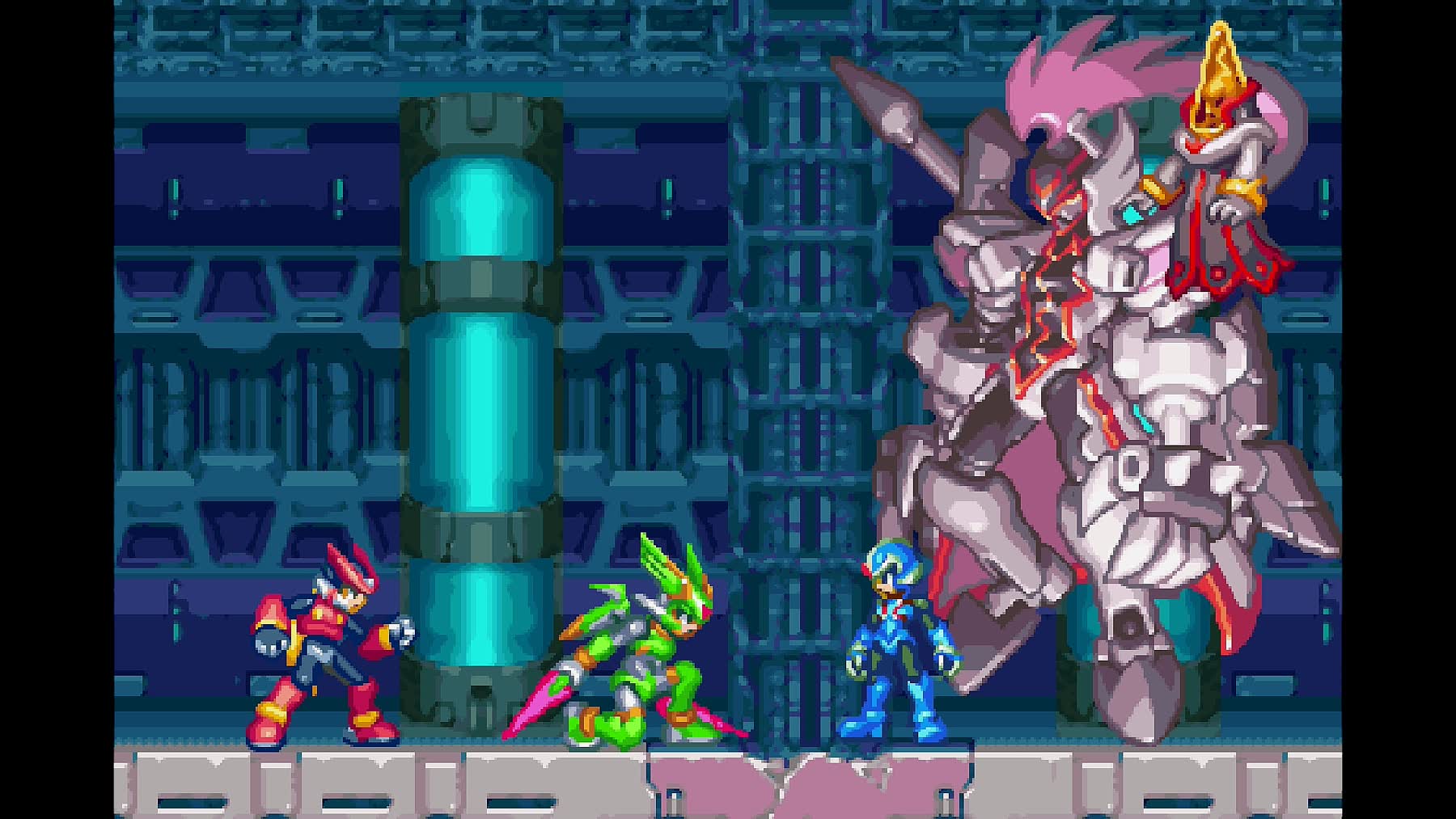
Its influence inside Mega Man was immediate. Three more Zero games followed on GBA between 2003 and 2005, refining the structure, smoothing some pain points and pushing the fiction toward one of the franchise's more complete arcs. Then Mega Man ZX carried that lineage onto Nintendo DS. Together, those games became a pocket-sized action saga with a tone and rhythm distinct from classic Mega Man, X, Legends and Battle Network.
The longer legacy is even cleaner now because Mega Man Zero/ZX Legacy Collection keeps the whole run playable on modern systems. The 2020 collection gathers Mega Man Zero 1, 2, 3 and 4 with Mega Man ZX and ZX Advent, adding an art gallery, music player, filters, Save-Assist, Casual Scenario Mode and the Z Chaser challenge mode. That preservation matters. Without it, Mega Man Zero might be remembered mostly as a hard GBA cartridge passed around by fans who swore the pain was worth it. With it, the game can be seen as the beginning of a full design argument.
That argument is simple: Mega Man did not have to grow by becoming bigger. It could grow by becoming sharper.
Twenty-four years later, Mega Man Zero still feels lean in a way many action games chase. It wastes little. It expects a lot. Its best moments are not about spectacle but about the instant when a dash, jump and saber slash line up perfectly and the screen briefly feels under your control. Then the next enemy appears and the game asks if you can do it again.
That loop is why this anniversary still matters. Mega Man Zero was not the franchise's loudest reinvention, but it was one of its bravest. It took a beloved character, stripped away the safety around him and trusted players to follow him into a colder future. On April 26, 2002, Zero woke up on Game Boy Advance. Mega Man has rarely felt quite as sharp since.