
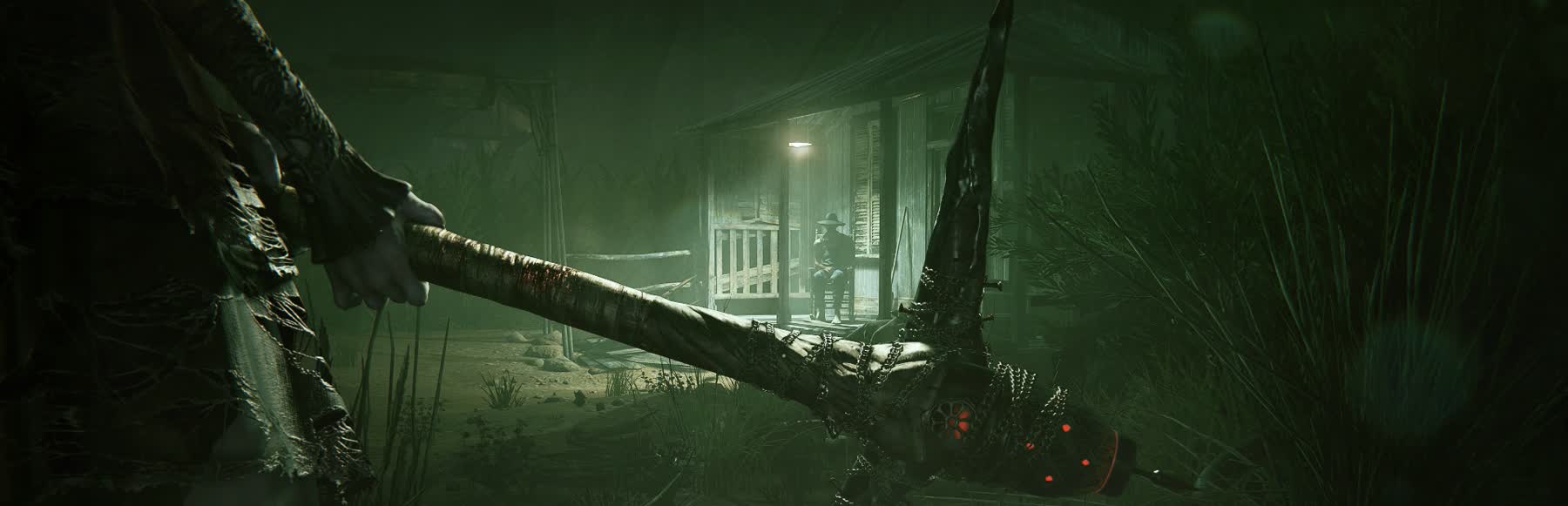
Nine years ago today, Outlast 2 launched and proved that Red Barrels was not content to haunt the same hallway twice.
After Mount Massive Asylum, the easy move would have been another locked building, another night-vision maze and another set of things clawing at doors. Instead, Outlast 2 arrived on April 25, 2017 and dragged the series into open air that somehow felt even harder to breathe. It came to PC, PlayStation 4 and Xbox One first, then Nintendo Switch in 2018. On paper, it was the sequel to one of the most effective jump-scare machines of the previous console generation. In practice, it was stranger than that: a bigger, meaner and more uncomfortable horror game about faith, guilt, voyeurism and the limits of being unable to fight back.
The first Outlast was clean in its terror. Miles Upshur entered Mount Massive Asylum with a camera, a battery meter and no meaningful way to defend himself. The rules were easy to understand. You ran. You hid. You watched through night vision while something terrible searched the dark. By 2013, that setup fit neatly into a horror moment shaped by Amnesia: The Dark Descent, Slender and a booming YouTube culture that loved fear as performance.
Outlast 2 had to follow that without simply rebuilding the asylum. Its answer was to go wide.
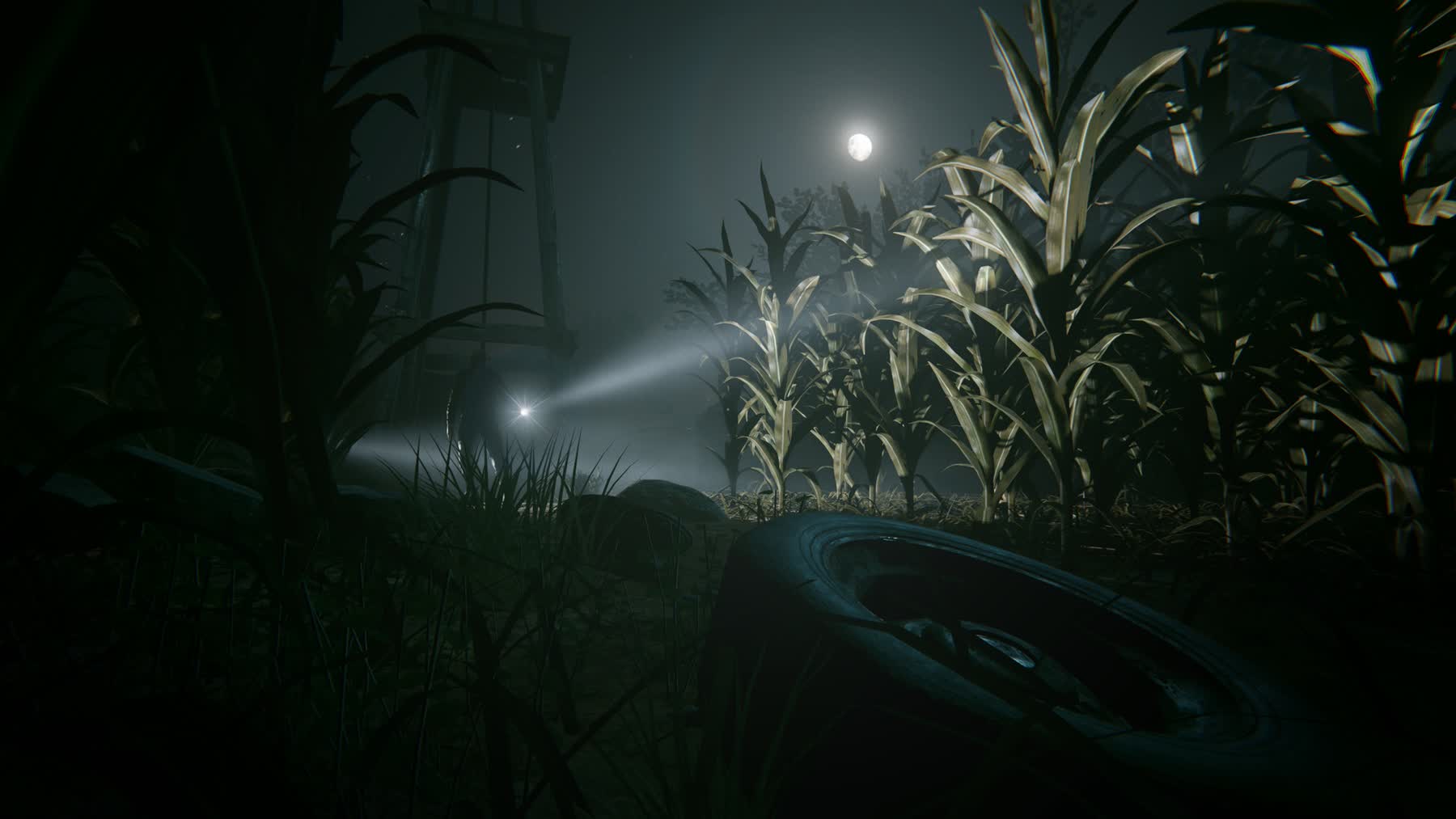
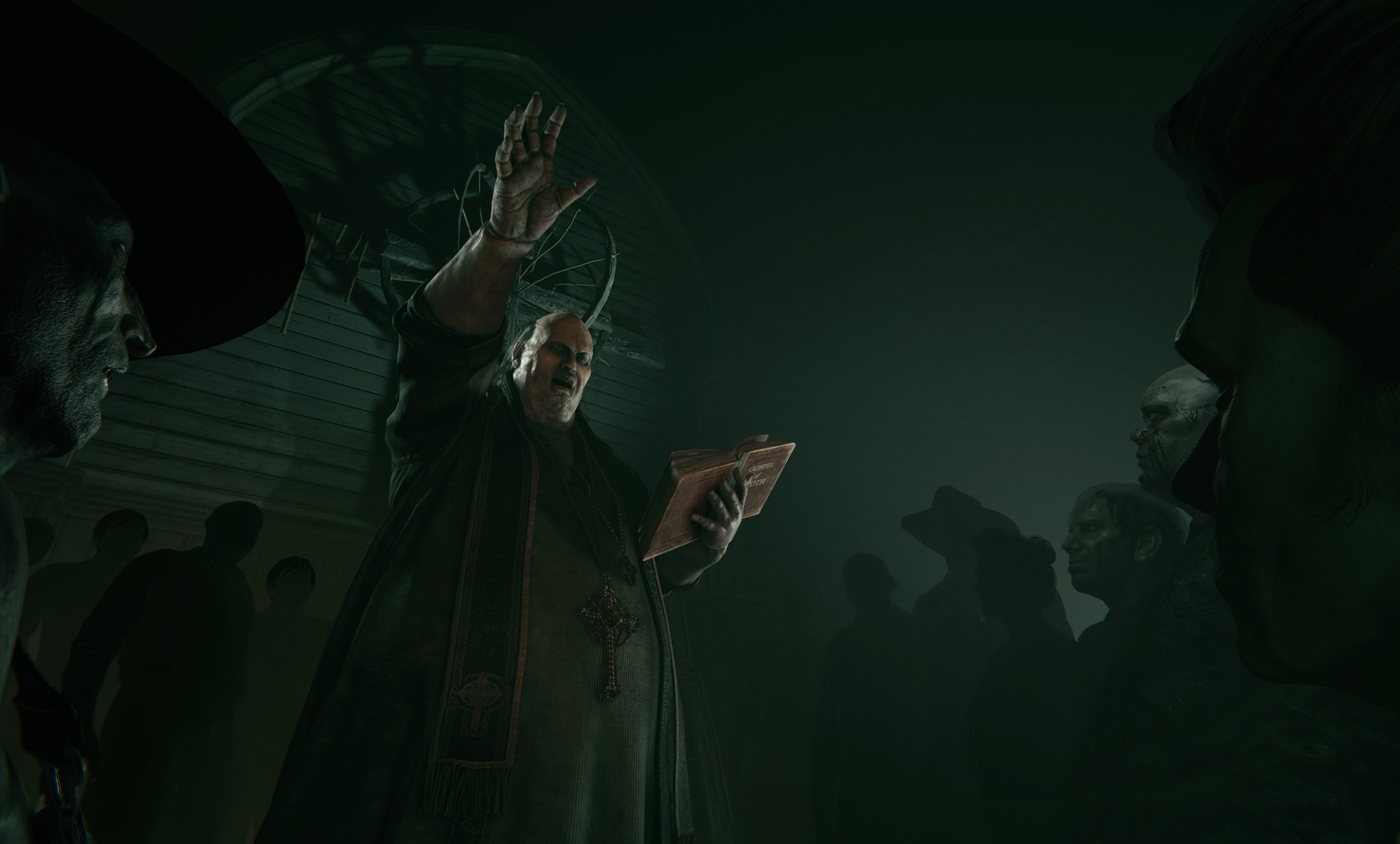
Instead of a locked institution, Outlast 2 threw Blake Langermann into the Arizona desert after a helicopter crash separates him from his wife Lynn. They are investigative journalists looking into the death of a pregnant woman known only as Jane Doe. What Blake finds is Temple Gate, a settlement ruled by Sullivan Knoth and a cult convinced that the end times are coming.
That change mattered. Mount Massive was claustrophobic by design, a haunted house that kept folding players back into vents, wards and security rooms. Temple Gate felt less stable. Cornfields, shacks, chapels, mines and open darkness made the world feel larger, but not freer. The extra space often made Outlast 2 more disorienting because it was harder to read where safety was supposed to be. You were not just trapped in a building. You were lost inside someone else's apocalypse.
That is where the sequel's best idea lived. Red Barrels kept the powerless protagonist, camcorder night vision and battery pressure, but changed the emotional texture around them. Outlast was industrial horror about corporate abuse and bodies turned into evidence. Outlast 2 was rural nightmare logic. It mixed religious extremism, childhood trauma and found-footage panic until the player was never totally sure whether the next terror was physical, psychological or both.
The result was divisive in exactly the way ambitious sequels often are. IGN's review praised the game's relentless scares, atmosphere and move away from the asylum, while also pointing to pacing issues and frustrating navigation. Steam's current page shows a large "Very Positive" user response, which says something important about its staying power. Even with complaints about trial-and-error chases and punishing sequences, players kept returning to it because its images stuck.
Some horror games are remembered for mechanics. Outlast 2 is remembered for feelings: the panic of hearing footsteps in tall grass, the awful glow of night vision, the sense that every beam of light is either guidance or bait.
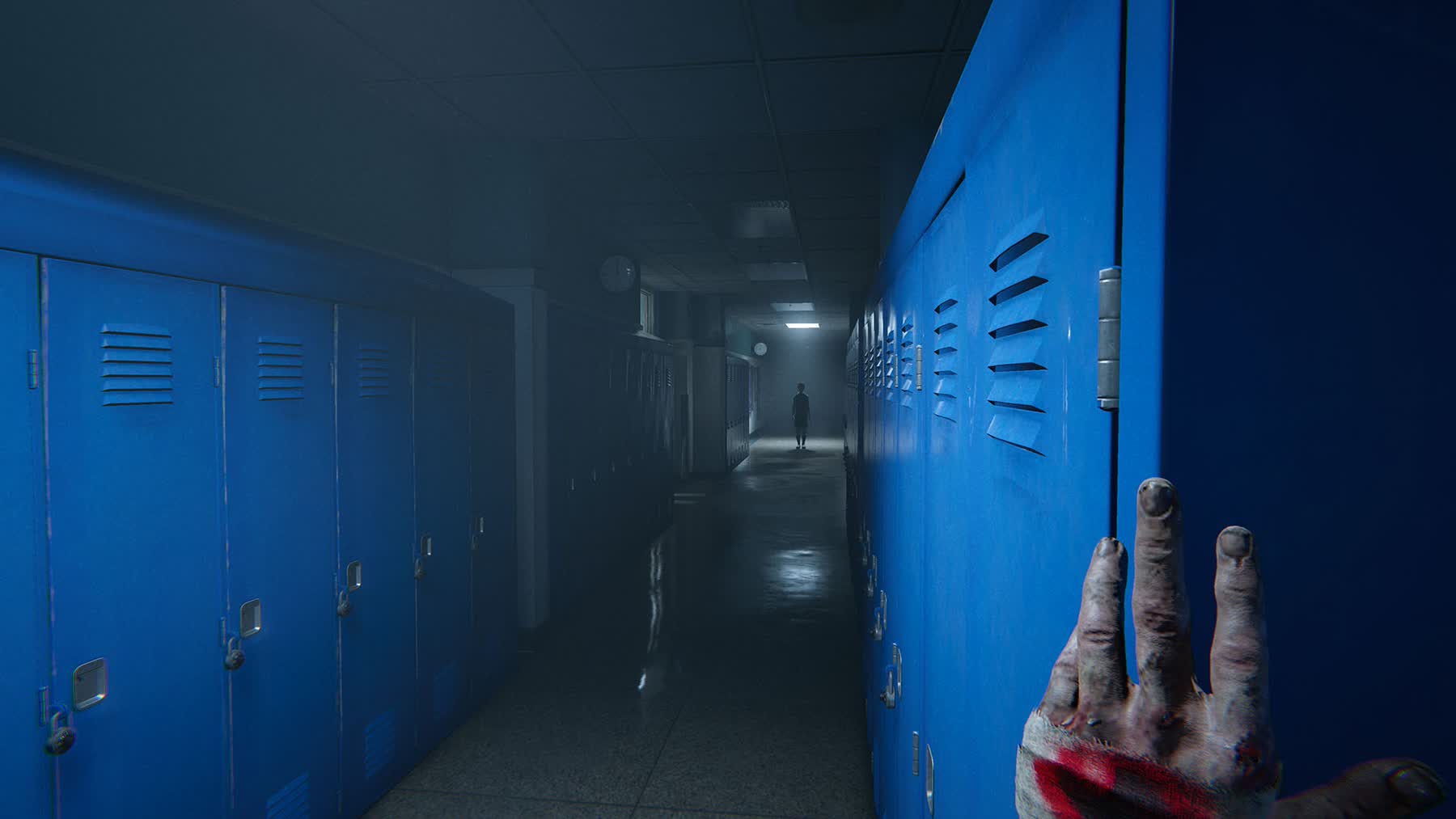
Its school sequences are the clearest example. Throughout the game, Blake is pulled out of Temple Gate and into hallucinations of St. Sybil, the Catholic school tied to his childhood friend Jessica Gray. These sections could be quieter than the cult chases, but they were not relief. They reframed the whole game around guilt and buried memory. The blue lockers and fluorescent halls became as important to Outlast 2 as the desert town, giving the story a second horror language.
That structure also helps explain why Outlast 2 still matters. In the mid-2010s, horror games were wrestling with two pressures at once. One side of the genre was chasing streaming-friendly shocks, the kind of moments that clipped well and made audiences react. Another side was becoming more intimate and psychological, with games such as SOMA and Layers of Fear using horror to pull at identity, memory and perception. Resident Evil 7, released only a few months before Outlast 2, brought first-person horror back into a blockbuster frame.
Outlast 2 sits at the messy center of that shift. It has plenty of loud, brutal chase sequences, but it also wants its horror to mean something beyond survival. It is not subtle, and it is not always graceful. Still, it pushed a popular indie horror formula toward themes that were harder to package. It asked whether the camera made Blake a witness, a participant or just another person unable to look away.
That question feels even sharper now. Outlast became famous partly because people watched other people endure it. The camcorder was not just a tool in the fiction. It was also a mirror for how the game traveled through streams, reaction videos and shared panic. Outlast 2 understood that watching is not neutral. Blake records evidence, but he also keeps moving through horror rather than stopping it. The player does the same.
Nine years later, Red Barrels has taken the series somewhere else again. The Outlast Trials turned Murkoff's cruelty into co-op multiplayer horror, with early access in 2023 and a console release in 2024. That pivot makes Outlast 2 look more like the last fully solitary nightmare in the series' original shape. It is the bridge between the pure isolation of Mount Massive and the social experimentation of Trials.
It is also easier to appreciate now because horror games have spent the past decade becoming more varied. The genre no longer has to choose between helpless hiding, combat-heavy survival or walking-simulator dread. Modern horror is broad enough for Alan Wake 2's multimedia weirdness, Signalis' retro survival design, Phasmophobia's co-op ghost hunting and Still Wakes the Deep's cinematic disaster horror. In that landscape, Outlast 2's rough edges feel less like failures of direction and more like evidence of a studio trying to escape its own template.
That does not make it an easy recommendation. Outlast 2 is abrasive, graphic and intentionally exhausting. Its subject matter can feel blunt. Its chases can turn fear into memorization when the route is unclear. But anniversaries are not only for flawless games. They are also for games that changed the conversation around a series, took a real swing and left players arguing about what they had just survived.
Outlast 2 did all of that on April 25, 2017. Nine years later, its best moments still feel like stumbling through the dark with a dying battery and a terrible certainty that the light ahead is not safety. It is just the next place the game wants you to look.