

Seven years ago today, Xbox One S All-Digital Edition arrived in stores and made one of console gaming's most uncomfortable futures physical by removing the very thing that had defined boxed games for decades.
It was not Microsoft's most powerful console. It was not a dramatic redesign. It did not launch a new generation, rescue the Xbox One from PlayStation 4's sales lead or introduce a strange new controller. In some ways, that was the point. The All-Digital Edition looked almost exactly like the Xbox One S, only with the optical drive gone. The blank front panel was the statement.
Microsoft launched the console on May 7, 2019 at $249.99, positioning it as $50 cheaper than the standard Xbox One S. It came with a 1TB hard drive, a wireless controller and download codes for Minecraft, Forza Horizon 3 and Sea of Thieves. It also arrived alongside a very 2019 argument: was losing discs worth saving fifty dollars?

At launch, the answer was messy. Xbox already had a strong digital story. Game Pass had turned the library into a subscription. Microsoft Store purchases followed accounts rather than shelves. Backward compatibility had helped rebuild trust with Xbox 360 and original Xbox players, at least for supported digital and disc titles. The All-Digital Edition tried to gather those ideas into a cheaper box for people who had already stopped buying physical media.
The trouble was that console value is never only about the silicon inside the case. A disc drive was not just a slot. It was used-game access, physical borrowing, Blu-ray playback, DVD playback, collector ownership and a small escape hatch from storefront pricing. For families with shelves full of Xbox One discs, the All-Digital Edition was not an entry-level Xbox. It was an Xbox that deliberately could not use part of their library.
That is why the price mattered so much. A $50 gap looked clean on a comparison chart, but retail reality was less tidy. Standard Xbox One S bundles were often discounted. Some came with newer games. Some gave buyers the same 4K streaming and HDR media pitch while keeping the Ultra HD Blu-ray player. The All-Digital Edition had the shape of a bargain, but it did not always feel like one once real-world sales entered the conversation.
It also landed at a strange point in the Xbox One era. By spring 2019, the generation was already winding down. Xbox One X had been on shelves for nearly two years, giving enthusiasts a more powerful route through the same library. Project Scarlett, the machine that became Xbox Series X, was waiting around the corner. The All-Digital Edition was not really a reset. It was a late-cycle experiment dressed as a budget option.

That experiment still matters because it exposed the trade in unusually plain terms. PC players had already moved toward Steam libraries, account ownership and downloads as the default. Mobile players never had discs to begin with. Console players were different. They had grown up with cartridges, discs, trade-ins and rental memories. Even people who bought mostly digital games could understand what disappeared when a console stopped accepting physical media.
For Microsoft, the All-Digital Edition was also a Game Pass machine before the company had fully proved what a Game Pass machine could be. The console's included games told that story. Minecraft was the forever game. Sea of Thieves was the live-service community game. Forza Horizon 3 was the polished first-party showcase that made Xbox feel bright, fast and sociable. Together, they were not only bundle filler. They were a small picture of the library-first pitch Microsoft wanted players to accept.
That pitch is much easier to understand in hindsight. Xbox spent the next generation leaning harder into subscriptions, cloud saves, cross-buy, PC overlap and a library that travels between devices. The Series S, introduced the following year at $299, did what the All-Digital Edition could not quite do. It made disc-free Xbox hardware feel like a true generation-tier product rather than a late Xbox One variant with one major feature removed.
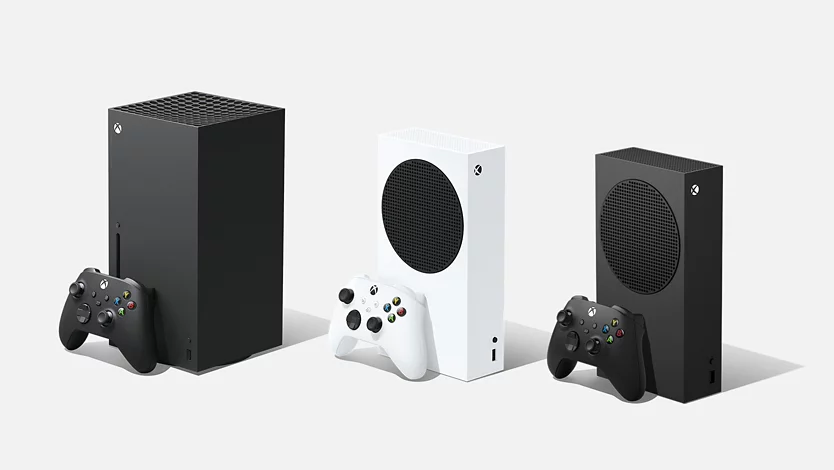
Series S changed the psychology. It was small, visually distinct and clearly part of the new generation. It had a custom SSD, faster loading, modern CPU architecture and the same basic platform future as Series X, only aimed at lower resolution and a lower price. Players could argue about storage limits, performance targets and long-term developer burden, but the machine had a clear identity. It was not simply the old box minus the drive.
That difference makes the All-Digital Edition feel more important than beloved. It was awkward because it arrived before the idea had enough supporting structure. Broadband speeds were better than they had been, but large downloads could still punish slower connections and data caps. Game Pass was growing, but it had not yet become the default way many casual observers described Xbox. Digital ownership was normal, but trust in platform holders was not unconditional.
The machine also landed before the industry had fully absorbed the preservation problem. When a console cannot read discs, every purchase depends on server access, licensing, account health and storefront availability. That is fine until games vanish, rights expire or a publisher decides an old release is no longer worth selling. Physical media is not perfect preservation either, especially in an era of patches and online dependencies, but the All-Digital Edition made the weakness of download-only ownership easier to see.
Still, it would be too simple to treat the console as a mistake. Plenty of players were already digital-first. For a household buying its first Xbox One late in the generation, a cheaper console with Minecraft, Sea of Thieves, Forza Horizon 3 and a Game Pass offer made sense. For players who wanted Netflix, digital purchases and a low-friction bedroom console, the missing disc drive may not have mattered. Microsoft was not inventing a market from nothing. It was trying to measure how big that market had become.
The All-Digital Edition's legacy is also visible beyond Xbox. PlayStation 5 launched with a Digital Edition. PC handhelds, cloud gaming devices and store-tied ecosystems have made the idea of a game machine without physical media feel ordinary. Even debates around future Xbox hardware, including Project Helix and Microsoft's next-generation developer messaging, now happen in a world where the disc drive is no longer guaranteed to be central.
That is the strange success of the Xbox One S All-Digital Edition. It did not need to become an adored console to matter. It needed to make the question visible in living rooms and retail listings: what is a console worth when the box no longer accepts boxes?
Seven years later, that question has not gone away. It has only become quieter because more players have adapted around it. Libraries are larger, subscriptions are stronger and digital sales are routine. At the same time, physical releases, second-hand games and preservation-minded collectors still carry emotional weight because they represent a kind of control that storefronts cannot fully replace.
The All-Digital Edition sits right in the middle of that tension. It was a modest white Xbox with a missing slot, launched late in a difficult generation, priced just low enough to make people argue and just high enough to make many hesitate. Yet it also pointed directly at where console gaming was going. Not because every player wanted that future, but because Microsoft was willing to put it on a shelf and see who reached for it.
That makes May 7 a useful anniversary. The Xbox One S All-Digital Edition was not the moment discs died. It was the moment a major console maker asked players to imagine buying a modern Xbox without ever touching one again. The answer was complicated in 2019. It still is. That is why this odd little machine remains worth remembering.