
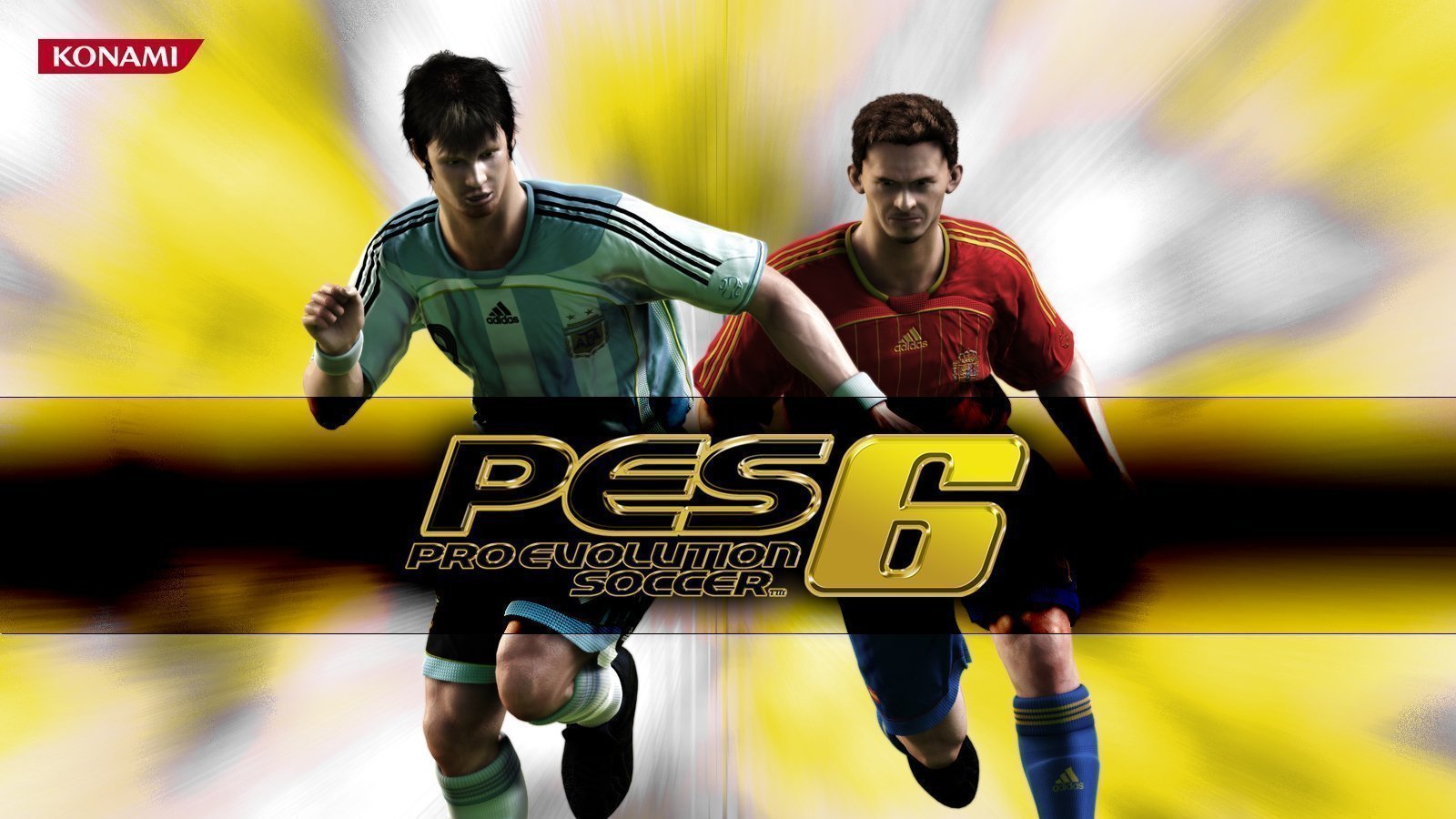
Twenty years ago today, World Soccer Winning Eleven 10 launched in Japan and caught Konami's football series at one of its strangest peaks.
Released for PlayStation 2 on April 27, 2006, Winning Eleven 10 would become part of the same annual cycle known elsewhere as Pro Evolution Soccer 6 in Europe and Winning Eleven: Pro Evolution Soccer 2007 in North America. The naming was messy, as it often was with Konami's football games. The feeling was much cleaner. This was PES at the end of the PS2's dominance, still fast, tactile and stubbornly focused on the ball in ways that made its fans forgive almost everything else.
That timing matters. By spring 2006, the football world was waiting for the World Cup in Germany and console gaming was already leaning into a new generation. Xbox 360 had arrived. PlayStation 3 was months away. Publishers were starting to sell players on HD crowds, shinier kits and broader online ambitions. Yet one of the year's most beloved football games still belonged most naturally to Sony's aging black box.
Winning Eleven 10 was not the kind of sequel that announced itself with one huge trick. It was a game of accumulations: a pass arriving with better weight, a defender stepping across at the right moment, a goalkeeper pushing the ball away from danger instead of gifting a cheap tap-in. PES had built its reputation on that kind of detail. FIFA had more official shine, more immediately recognizable broadcast gloss and the weight of the license machine. Konami had the arguments that happened after a 1-0 match where the losing player still swore the game understood football better.
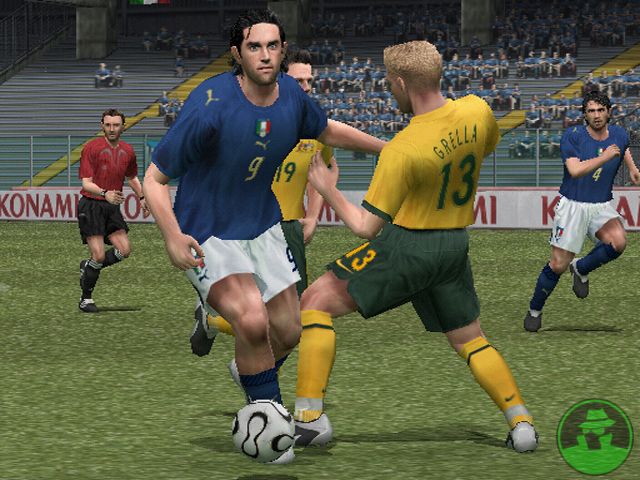
The PS2 era was where that identity hardened. Earlier Winning Eleven and PES entries had already made the series a cult favorite among players who wanted football to feel less like an arcade race from box to box. By Winning Eleven 10, the series had become fluent in a language of first touches, body shape, momentum and frustration. Not frustration as a flaw, at least not always. Frustration as the thing that made a mistimed through ball or a crowded midfield feel honest.
That is why PES fans talked about the games like rituals. You learned the fake names. You tolerated the kits. You downloaded option files, edited squads and argued over whether the newest version had ruined shooting or fixed defending. You played Master League not because it had the richest presentation in sports games, but because it gave those fictional clubs and half-licensed squads a long-term life. A player developing over seasons mattered more because the act of using him well on the pitch felt personal.
Winning Eleven 10 refined that bond rather than tearing it up. Player movement was quicker. Reactions felt snappier. The CPU pressed harder. Sprinting carelessly could drain a team late in a match, which gave the game's pace a tactical cost. Defensive AI received noticeable attention, with back lines covering space and goalkeepers behaving more reliably than in the previous installment. None of that sounds glamorous on a feature list now. In a football game, though, those are the changes that determine whether a match feels scripted or alive.
The game also arrived with a World Cup-shaped shadow hanging over it. Without the official FIFA World Cup license, Konami built its own International Challenge mode into the PS2 version. It was not the real tournament in name, but everyone understood the appeal. In 2006, national-team football was everywhere, and Winning Eleven 10 gave players another way to chase that summer's mood without abandoning the series' heavier, more deliberate style.
What made the PS2 version stand out is how complete it felt beside the newer hardware push. The Xbox 360 version of that year's PES cycle had the advantage of HD novelty, but it also carried cuts and compromises. The PS2 game still had the density. It had the modes, the editability, the familiar rhythm and the better sense that Konami's old machine had not run out of tricks. For a series built on feel, that mattered more than a cleaner image.

Online play was part of the conversation too. Winning Eleven 9 had brought the series online in North America on PS2, and the 2007-branded release kept that side alive. By today's standards, the interface and feature set look skeletal. Matchmaking was not elegant. Communication was limited. Edited rosters created their own complications. Still, the idea of testing PES against strangers carried real charge at a time when the series had mostly lived through couches, dorm rooms and local rivalries.
The best part is that Winning Eleven 10 did not need online play to prove itself. Its local matches still had the old electricity. PES at its best was not only about scoring beautiful goals. It was about the ten minutes before the goal, the period where both players knew what was being attempted and only one could stop it. A winger held up a run. A midfielder turned into space. A defender backed off instead of diving in. The shot itself could be scruffy, but the build-up told the story.
That is the part that made the series feel different from FIFA in 2006. EA's game was improving and would eventually surge hard during the HD generation, but PES still owned a certain kind of credibility. It was the football game for players who wanted to say they could see the seams between a real chance and a video game chance. The series was not actually pure simulation, and its quirks were many, but it made players believe that reading football helped them play better. That was powerful.
Critical response at the time reflected that affection. IGN's review of Pro Evolution Soccer 6 praised its responsive controls, defensive improvements and accuracy on PS2 while noting that it felt like an improvement rather than a revolution. GameSpy's PS2 review called it the strongest version of that year's release cycle, even while pointing to familiar complaints around visuals, online limitations and licensing. Those caveats were not small. They were part of the PES bargain.
Licensing was always the bruise. Winning Eleven 10 and PES 6 could play beautifully, then ask fans to accept missing or altered team identities. The German league situation became one of the year's sore points in later regional versions, with Bayern Munich effectively standing alone where a full league should have been. For some players, that was an immersion breaker. For many others, it was another reason the edit mode and option-file community became inseparable from PES culture.

Looking back, that tension is almost the whole story of PES. Konami's football games often lacked the official surface that casual players expected, but they inspired a devotion that official surface alone could not buy. Fans did not just consume the game. They corrected it, patched it, renamed it, rebuilt its teams and carried it through seasons of real football. The weakness became a habit. The habit became a community.
Winning Eleven 10 also sits near the end of a particular sports-game era. Annual sports games still mattered enormously, but they were not yet platforms in the modern sense. They arrived on discs, changed by increments and lived through arguments over tiny mechanical shifts. A tweak to sprinting or goalkeeper rebounds could define an entire year. A missing league could send players into forums for fixes. A slightly different match speed could split friends who had been playing the series for half a decade.
That world feels distant now. Konami's football series eventually became eFootball, a free-to-play platform across PlayStation, Xbox, PC and mobile. FIFA became EA Sports FC after EA and FIFA went their separate ways. Sports games increasingly revolve around live content, card modes, seasonal updates and service-style retention. Some of that has brought convenience and longevity. Some of it has made the old annual-disc arguments look almost charming.
Winning Eleven 10 is worth remembering because it captures the series before that shift fully took over. It was annualized, commercial and compromised, but it still felt hand-tuned around the match. Its best quality was not scale. It was the way a simple pass could feel risky because the receiving player's body was not quite right, or the way a defender's slight hesitation could open a lane that did not exist a second earlier.
Twenty years later, that is why PES 6 and Winning Eleven 10 still come up when fans talk about Konami's golden years. Not because they were perfect, and not because nostalgia has erased every ugly menu or missing license. They are remembered because they made football feel contested. Every touch was a small negotiation between intention, timing and the limits of the player on screen.
On April 27, 2006, Winning Eleven 10 kicked off in Japan as another yearly entry in a series that seemed impossible to name cleanly across regions. Two decades later, the name confusion matters less than the memory of how it played. In an era rushing toward HD spectacle and online services, Konami's PS2 football still knew the simplest truth about the sport: the whole match can turn on one touch.