

Twenty years ago today, Prey finally escaped development hell and turned one of PC gaming's oldest promises into a strange, angry and unforgettable shooter.
Prey reached North American stores on July 11, 2006 for PC and Xbox 360, with Europe following on July 14. By the time players actually walked into Tommy Tawodi's bar and watched the ceiling open, the name had already carried a decade of expectation. 3D Realms had first been talking about Prey in the mid-1990s, back when portals, destructible environments and next-generation engine talk felt like a glimpse of some impossible future. The finished game arrived much later through Human Head Studios, running on a heavily modified id Tech 4 and carrying only pieces of that original dream.
That history could have crushed it. Instead, it made Prey feel haunted before the aliens even arrived.
Prey begins small. Tommy is a Cherokee mechanic, former soldier and restless man who wants out of the reservation life the game sketches around him. He argues with Jen, his girlfriend, while his grandfather Enisi tries to keep him rooted. Then the bar is ripped from Earth and dragged into the Sphere, a living alien vessel that harvests people, places and whole chunks of the planet. The opening works because it gives the invasion a human scale first. Before Prey becomes all portals and gravity switches, it lets the player stand in a room that feels ordinary enough to lose.
That was always its best trick. Prey was marketed as a shooter that turned the genre upside down, but its memory rests less on raw gunplay than on disorientation. The Sphere is not just a spaceship. It is a meat-and-metal maze where rooms fold into each other, doors can be windows, ceilings can become floors and alien machinery looks as if it has grown around everything it has swallowed.
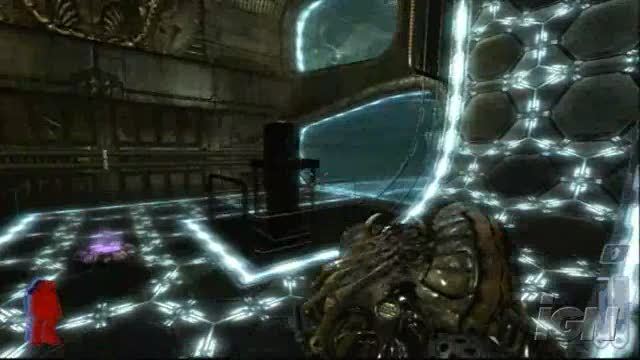
The portals still stand out. Prey did not let players create them the way Valve's Portal would a year later, but it used fixed portals as stage magic. You could see through them, shoot through them and step through a space that should not logically fit inside the room. In 2006, that was enough to make a corridor feel newly unstable. The player was not only moving through levels. They were being taught to distrust the geometry.
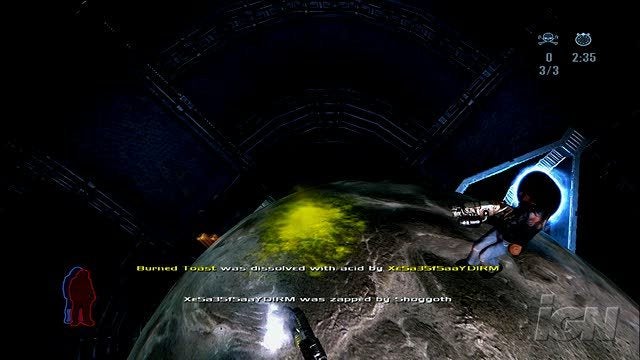
Gravity gave the game its other identity. Wall-walking paths and gravity switches made combat and traversal feel slightly seasick, especially when a familiar hallway became a floor, then a wall, then something else entirely. Small planetoid spaces inside the Sphere let Tommy move around surfaces that wrapped back on themselves. Prey was not always elegant with those ideas, but it had the courage to make them visible and tactile. It wanted players to feel the machine of the level moving under their feet.
That ambition mattered in the Xbox 360's first full year. Shooters were already moving toward clearer cover lines, cleaner set pieces and online multiplayer structures that would define the generation. Prey came from a weirder branch of the family tree. It had Doom 3's darkness in its engine, Duke Nukem-era appetite in its attitude and old PC-shooter confidence in its willingness to throw odd mechanics at the player just because the tech could support them.
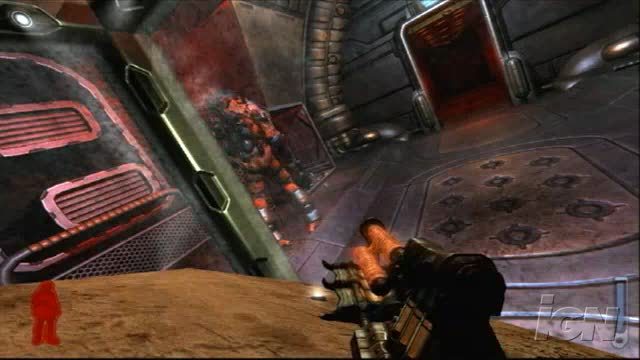
Not all of it has aged cleanly. The combat can feel stiff now, with enemies that rarely match the imagination of the spaces around them. Its treatment of Tommy's Cherokee identity mixes rare mainstream representation with mid-2000s genre bluntness, especially in the way spiritual powers become mechanics for puzzles, death and resurrection. Some of those choices remain fascinating because they are so specific to this game. Some feel like a reminder of how clumsy big-budget genre writing could be when it reached for culture, myth and trauma without enough care.
Yet Tommy still gives Prey a different silhouette from many shooters of its era. He is not a faceless marine dropped into an alien war. He is furious, grieving and often unwilling to accept the role the story pushes onto him. Michael Greyeyes' performance gives that anger shape. Prey does not always know what to do with Tommy beyond the broad strokes of rescue, revenge and destiny, but the game is better because there is a person at the center of its machinery, not just a camera with a gun attached.
Prey also deserves to be remembered as a commercial release, not only as a curiosity. It received generally positive reviews in 2006 and 3D Realms' Scott Miller later said it had passed one million units worldwide within its first two months. For a PC and Xbox 360 shooter with such a long road behind it, that was not a small landing. A sequel was planned, and for years Prey 2 became its own phantom, remembered for a bounty-hunter pitch and a cancellation that helped turn the whole brand into an industry ghost story.
That ghost story only became stranger after Bethesda acquired the rights and Arkane used the name for a very different Prey in 2017. Arkane's game was not a sequel, and it chased a colder immersive-sim fantasy aboard Talos I instead of continuing Tommy's fight against the Sphere. The shared title has made the original feel oddly displaced. Search for Prey now and many players think first of mimics, coffee mugs and neuromods. The 2006 game sits behind it like an earlier abduction report, half remembered and hard to neatly file away.
Its availability has not helped. The PC version has spent years in a messy digital state, while Xbox has kept a store listing alive for the backward-compatible version. That uneven access suits the game's legend in a frustrating way. Prey is not quite lost, but it often feels harder to point new players toward than a shooter with this much history should be.
Twenty years later, the original Prey is easiest to value as a game of pressure and residue. You can see the development scars. You can feel ideas that were once supposed to change everything being squeezed into a more conventional shooter frame. You can also see why it never fully left the minds of players who met it at the right moment. The bar abduction, the living ship, the fixed portals, the gravity paths and the death-walk afterlife all gave Prey images that stuck.
It did not become the future 3D Realms imagined in 1995. It did not get the sequel its ending promised. It did not even keep sole ownership of its own name. But on July 11, 2006, Prey finally arrived, strange and scarred, with enough impossible rooms to make its long wait feel like part of the myth. Two decades later, that may be the most fitting legacy for a game about being swallowed by something bigger than itself.